Limitly - Agentic AI Concept exploration
In this age of multiple grocery applications that deliver within 15 minutes as promised, the only factor left to play with is money.
We decided to find out if an agent could do the comparing for you.




WHY this?
We were already designing conversational agents that flagged spending and prompted action. And at some point we started wondering — okay, but what else can an agent do for a user?
Can an agent navigate multiple apps, do the repetitive work, and hand the user a decision?
The real scenario
Someone opens Blinkit. Adds everything to the cart. Then opens Zepto. Adds everything again. Then Swiggy Instamart. Again.
Or, two people open the apps on separate devices and compare verbally.
Which is somehow worse.
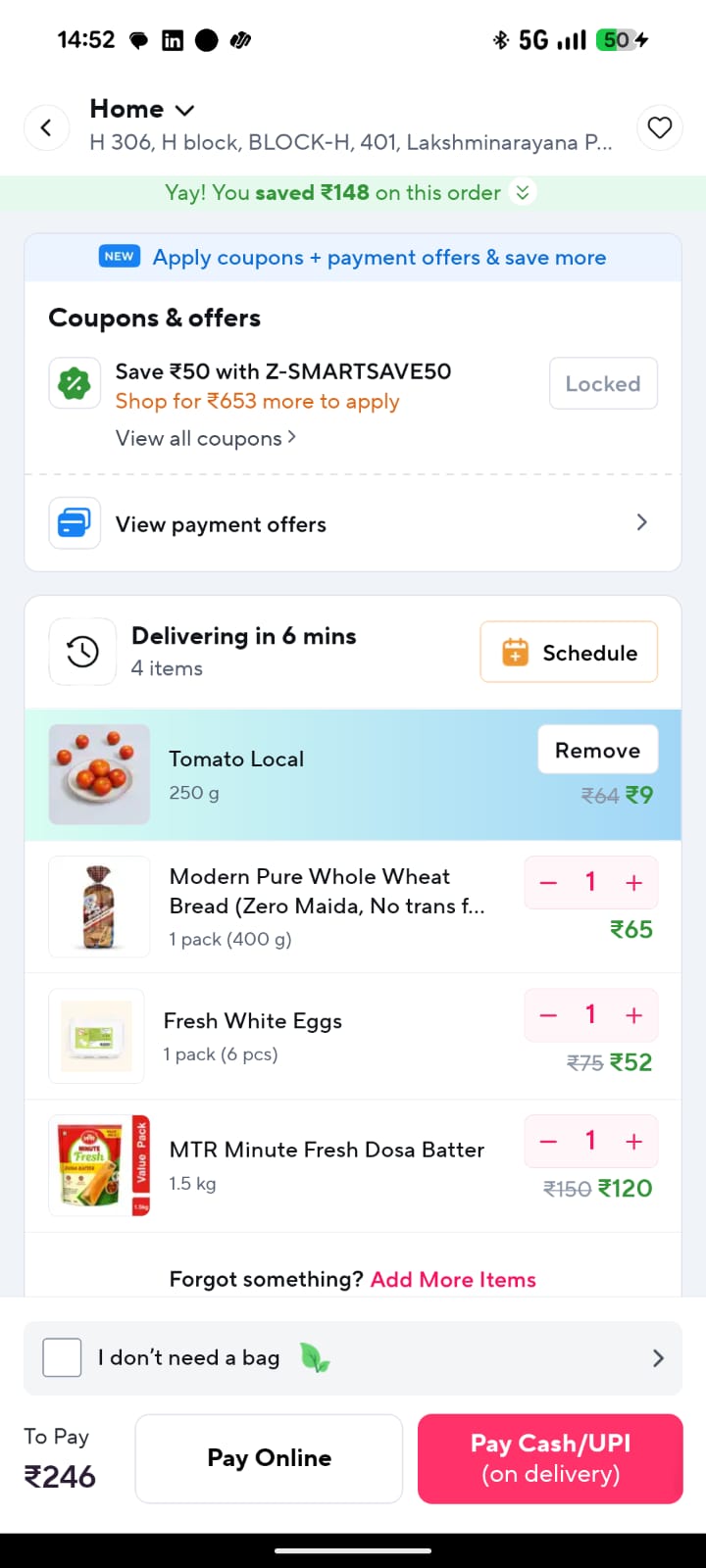

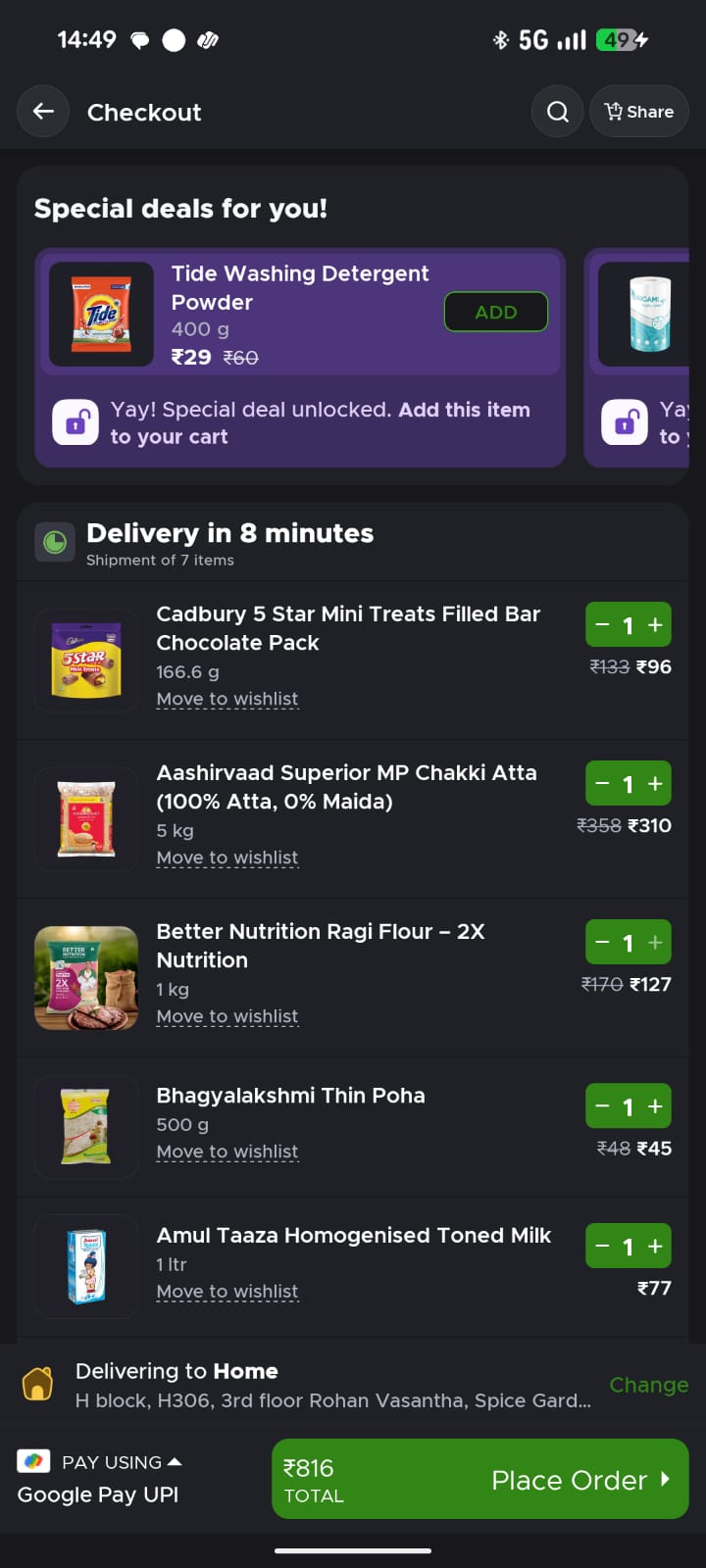
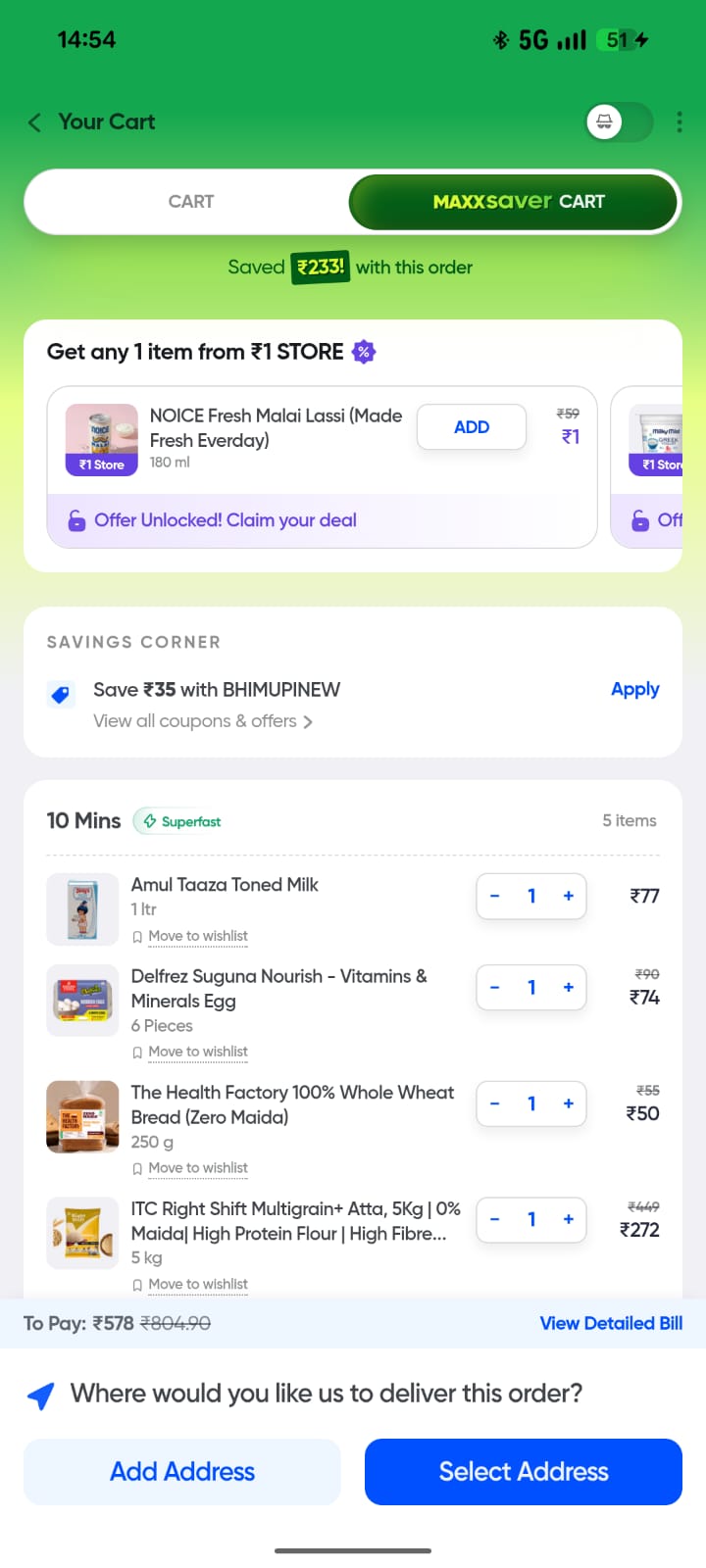
Three apps, one person, Three separate carts.

Two people surfing on separate apps
What we imagined
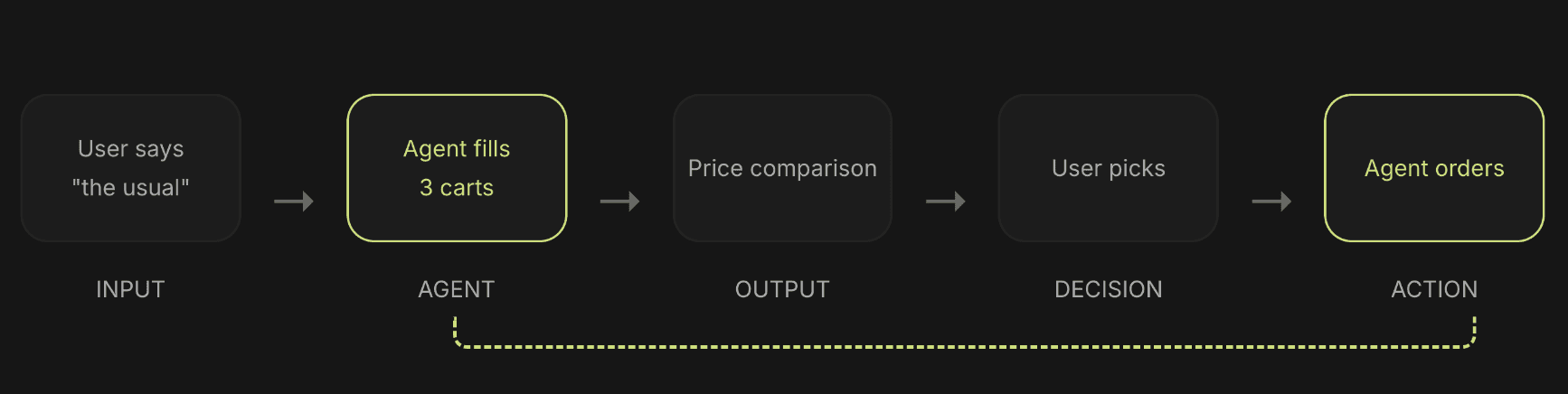
You describe your list. Or better you just say it. "The usual eggs, milk, bananas, bread."
The agent fills the cart. Across every app. At the same time.
Then it comes back: here's what everything costs on each platform. Here's the cheapest total. Here's if splitting across two apps saves you more.
You tap confirm and pay when you receive it. That's it. The decision is yours. The work was the agent's.
the complication
Ordering a product comes with a set of specifications the user has already decided on and the agent needs to know them.
Take milk. Is it 500ml or 1L? Full-fat or toned? A specific brand or whatever's available? Multiply that across a full grocery list.
If an agent fills the wrong item even with good intentions it doesn't save you time.
It creates a return or forces the user to use the item they didn't want to buy.

So the real challenge is how can the user be sure the agent filled the cart with exactly the right things?
The friction just moves from comparing apps to entering specs.
Resources available
The first: API keys — if the platform gives them out. Some do. Some don't.
The second: web scraping — having the agent read the app the same way a user would, and pull the information from the screen.
Scraping works, but it comes with a catch: apps know when a robot is browsing. They actively block it. That's called bot detection — and it means your agent can get kicked out mid-search.
So the real starting point wasn't "here's our data access." It was "here's what we can try, and here's where it might break."
Method 1
API access
Where the platform gives it out. Clean, direct, reliable.
If Available
Method 2
Inventory scraping
Agent reads the app like a user would. Works until it gets caught.
Risk: Bot Detection
The hypothesis: what if we used an app the user already trusts — one they have used a lot and know does the job, where they've already set their preferences — and used that as the source of truth?
What we tried
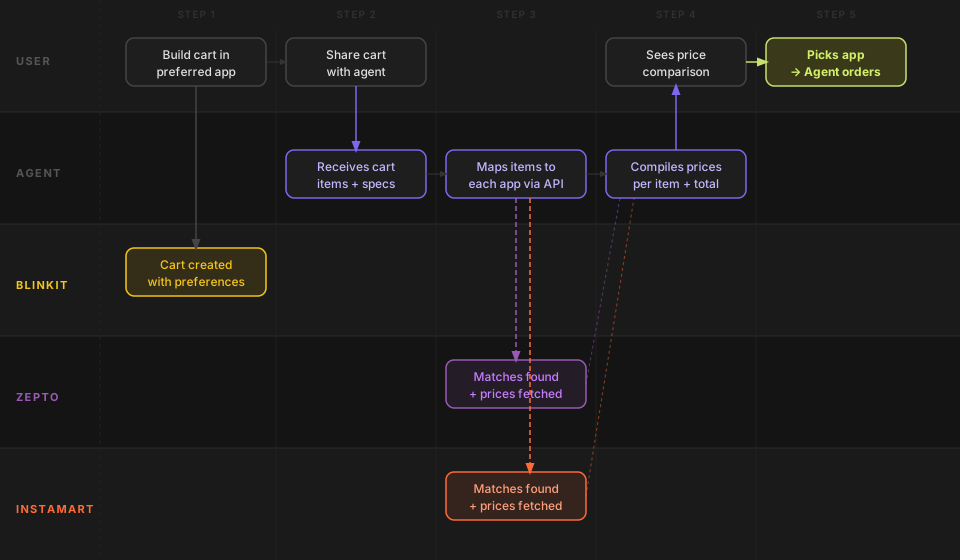
Step 1: the user builds their cart in the app they already use. Their brands. Their sizes. Their preferences. Already there.
Step 2: they share that cart with the agent (no typing the lists). Items, specs, quantities, all.
Step 3: the agent takes that cart and maps it across other apps using their APIs. Looking for the same or closest equivalent item on each platform.
Step 4: it comes back with a price comparison. Per item. Total basket. Delivery fee. All of it. User can view the products as screenshots from each app.
Step 5: the user decides which app to actually order from. Or the agent can place the order if they're ready.
The key insight: don't ask the user to describe what they want. Let the cart they already built do the describing.
where it gets tricky
01
API access
These apps offer public APIs. The only way in is scraping, which they actively try to block. Foundational blocker.
02
Dynamic pricing
Prices change constantly. The comparison is only accurate at the exact moment it runs. a timestamp solves the communication problem
03
Item mapping
The same product is named differently across apps. The agent has to figure out if they match before it can compare anything.
04
Stock availability
An item available on one app might be out of stock on another. Breaks comparisons but is detectable and catchable
the bigger picture
Once you've solved cart comparison for groceries, the pattern is obvious.
The underlying problem is always the same: users waste time doing comparison work that a system could do better. The agent's job is to absorb the repetitive work. Give back the decision. That's the version I want to see exist.
Groceries
Cabs
Tech
Gifts
what we took away
It can do it for you. With a few setbacks. But we like setbacks.
The technology exists. The APIs (mostly) exist.
The harder problem is trust. Getting the user to believe the agent picked the right item.