Limitly - designing a better way to manage personal finances
Company

Swachh AI Technologies

Team

Co-founder, Backend Dev (2), Frontend Dev intern

Output

Introduced a new onboarding framework that helped improve onboarding completion and strengthen Day 0 engagement, with average first-session time reaching 727 seconds.

Role

UX Designer

Timeline

3 months

Company

Swachh AI Technologies

Role

UX Designer

Team

Co-founder, Backend Dev (2), Frontend Dev intern

Timeline

3 months

Output

Introduced a new onboarding framework that helped improve onboarding completion and strengthen Day 0 engagement, with average first-session time reaching 727 seconds.

Summary

At Swachh AI, I led the onboarding experience for Limitly — the make-or-break moment where users either commit or leave. Through user interviews, drop-off analysis, and archetype-based flow testing, I arrived at an interface that significantly improved onboarding completion rates.

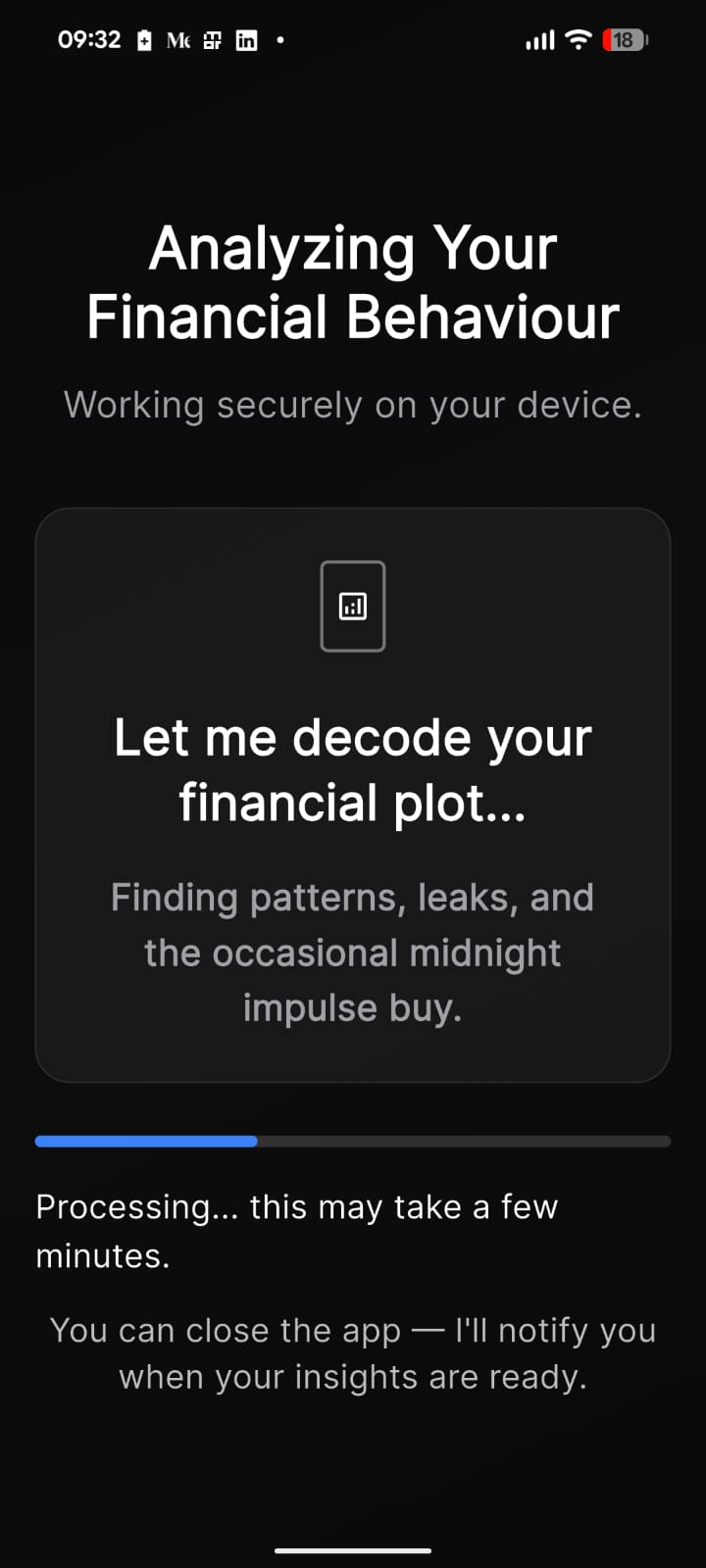
  • Onboarding redesign with an empathetic hook, transparent data policy, and a personalised T.A.R.S. setup flow

  • Transactions interface with monthly totals, category filtering, recurring controls, and split payments

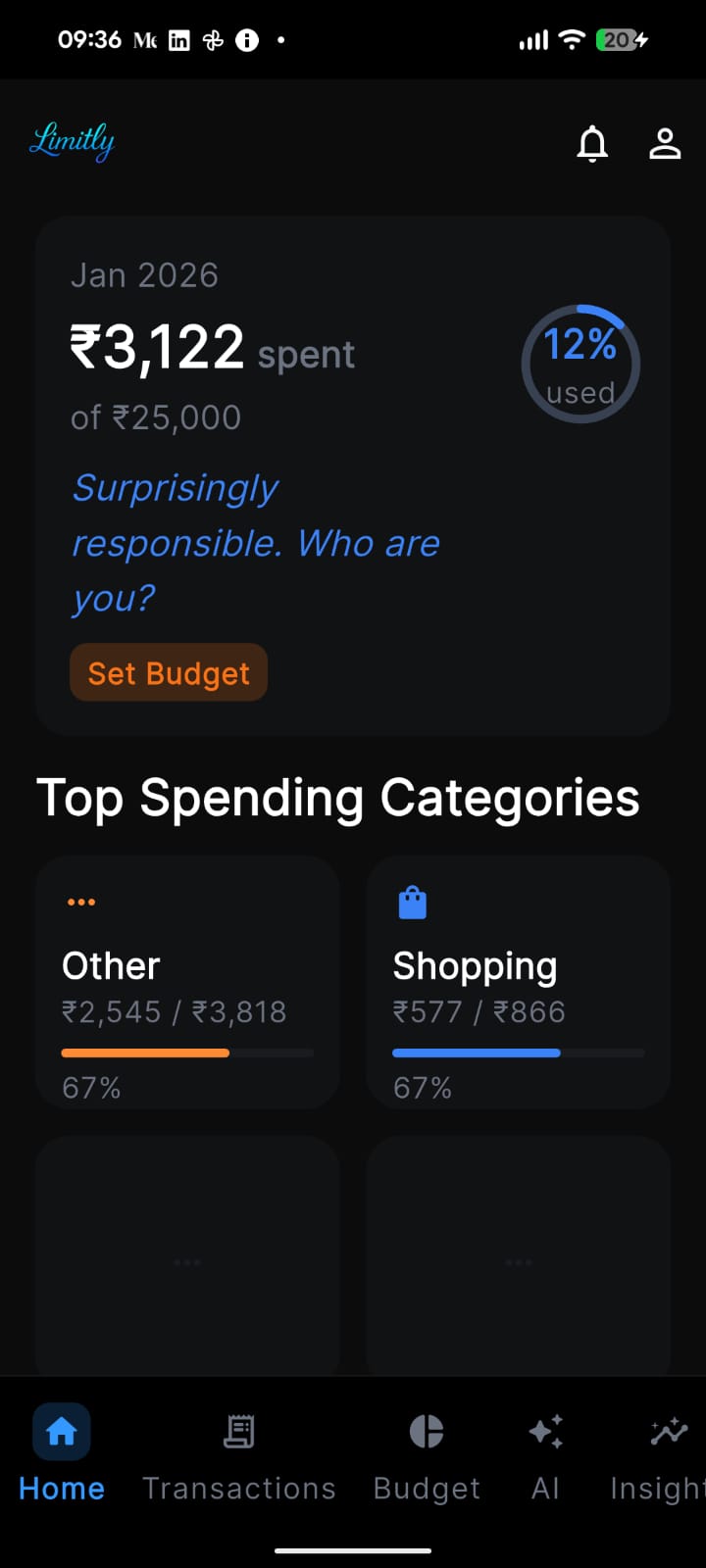
  • Budgeting reframed as visual planning with donut charts, progress bars, and a savings stack

  • Conversational agent that flagged specific moments and prompted real-time action

The context

What is Limitly?

Limitly is a personal finance and expense-tracking mobile app that helps users manage their money and stay within budget using smart, AI-powered feedback/insights and automation.

Limitly is a personal finance and expense-tracking mobile app that helps users manage their money and stay within budget using smart, AI-powered feedback/insights and automation.

Who is it for?

Students (18-24)

Students building money habits

Learning to budget save, and grow

Early Professionals

Starting careers & managing income

Building financial stability & savings

Self-Employed/Buisness owners

Managing multiple or project based income

Tracking multiple cash flows & staying in control

Why?

Most finance apps assume you're already organised. Limitly was built for the people who aren't. Give them a system that works quietly in the background so staying on top of money doesn't require discipline every single day.

how it began.

Can you perform a UX audit of the current application to find out where the app is lacking?

Can you perform a UX audit of the current application to find out where the app is lacking?

Very well then, I’d like to audit the app as if I’m a Day 1 user walking in with no context — through onboarding, setup, dashboard, insights. Then analyse every friction point as the designer.

Very well then, I’d like to audit the app as if I’m a Day 1 user walking in with no context — through onboarding, setup, dashboard, insights. Then analyse every friction point as the designer.

so what was the problem?

Friction points in the current app
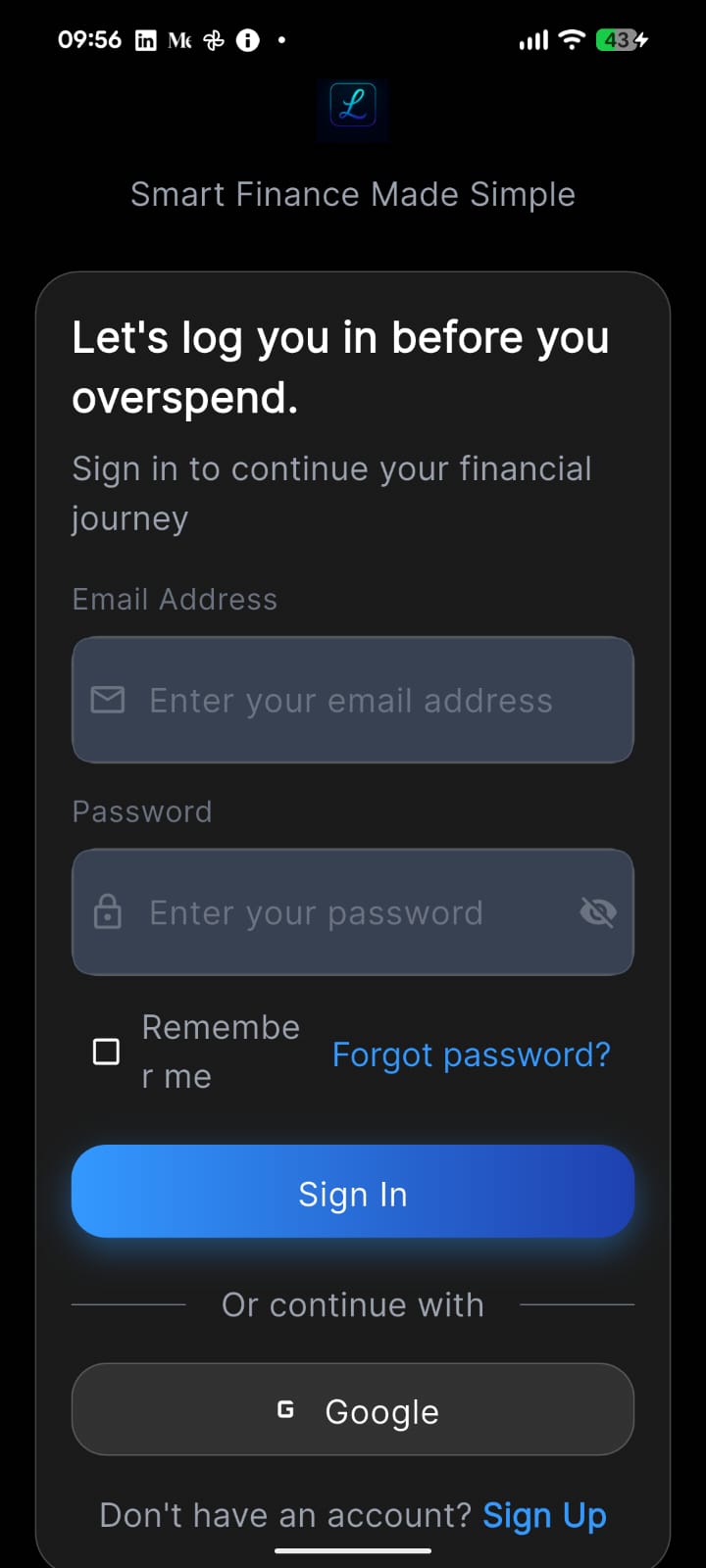
Forced Onboarding
Questioning legitimacy
Privacy concerns
Info dump on user
No guidance

Trust is a scary thing in Fintech, you can't be pushy.

1

Unclear Value proposition

Users are asked to sign up before the product has said anything about why it should matter to them

2

High cognitive load

New users are forced to make multiple decisions (budget limits, categories, tracking method) before they've seen their own data

3

Insights lack clarity

Too many signals surfaced at once; users can't tell what needs attention right now

4

Blind trust expected

The app requests permissions and data access without earning the moment

Alright, lets dive deeper

What are the people saying?

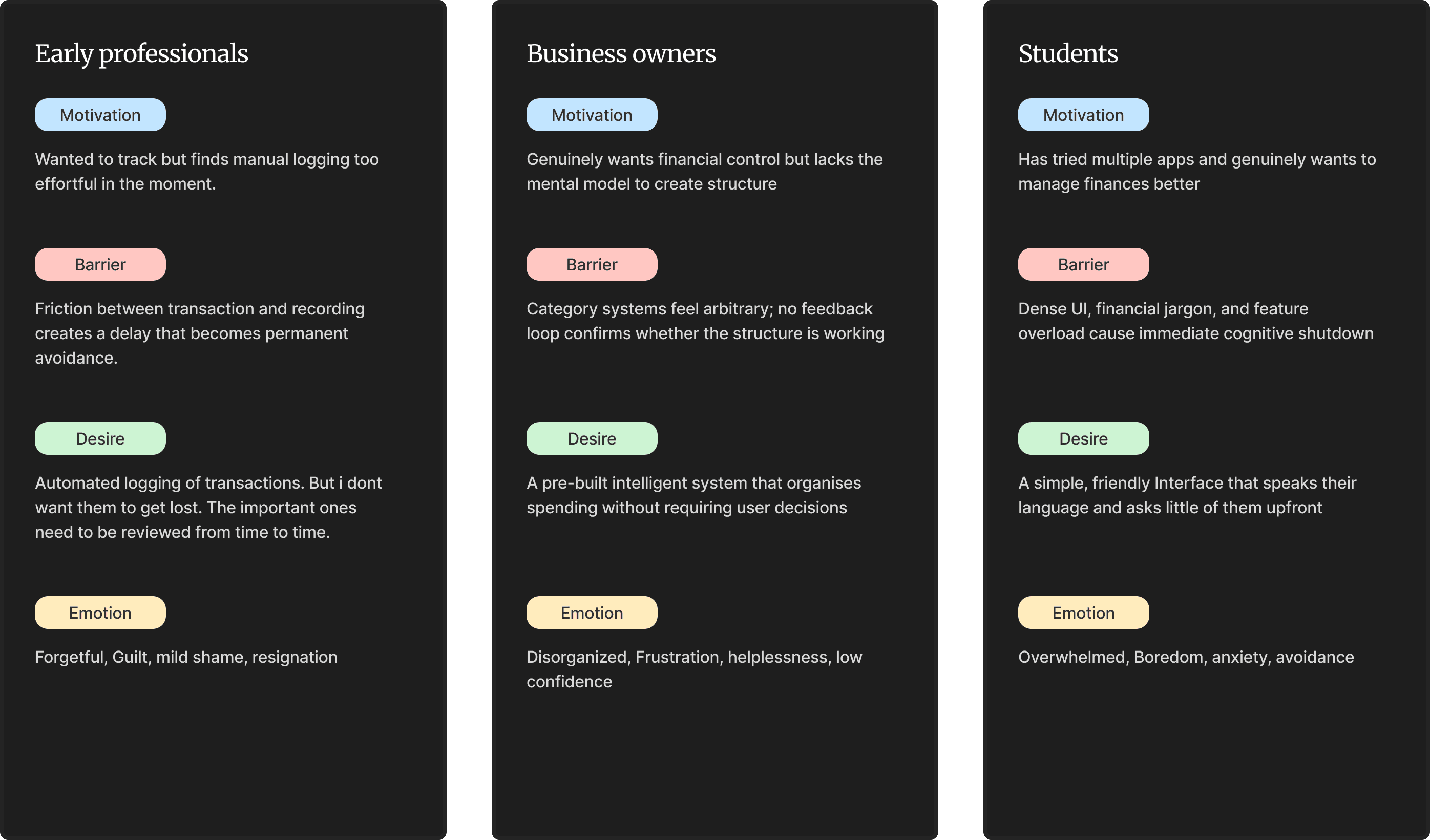
80 visitor interviews + 12 usability tests revealed a pattern: Users weren't struggling with features. They were struggling with clarity. Three distinct user archetypes emerged:

80 visitor interviews + 12 usability tests revealed a pattern: Users weren't struggling with features. They were struggling with clarity. Three distinct user archetypes emerged:

User pain points

These were pain points observed across all user groups

These were pain points observed across all user groups

  • Scattered Transactions

  • Untracked & forgotten subscriptions

  • manual logging is a hassle & boring

  • Cannot control overspending.

Validating problems people were facing

Emotions in the background

They are arriving already overwhelmed, self- critical, and primed to interpret a confusing interface as confirmation that managing money is simply beyond them.

They are arriving already overwhelmed, self- critical, and primed to interpret a confusing interface as confirmation that managing money is simply beyond them.

Retention reality

73%

abandon apps during onboarding due to design problems alone

SaaS Factor, 2024

39%

would delete a finance app after a single security issue

EY, cited in Contentworks, 2024

10–15%

Day 7 retention rate, regardless of motivation in all sectors

ContextSDK, 2024

Studying the tried and tested

Feature comparison matrix

Limitly vs all 4 competitors across their feature listings

Feature

Feature

Revolut

Revolut

Cleo

Cleo

Fold

Fold

Curie money

Curie money

Limitly

Limitly

India native

India native

Auto Expense Tracking

Auto Expense Tracking

SMS sync

SMS sync

Spending insights

Spending insights

Budget setting

Budget setting

Gen Z Tone / UX

Gen Z Tone / UX

Returns

Returns

Gamification

Gamification

Trust / No FTC issues

Trust / No FTC issues

Not Available

Implemented

Partially Implemented / Similar Approach

Managing money was not the problem,
it's the weight of facing it.

Managing money was not the problem, it's the weight of facing it.

Actionable insights

#Priority 1

Value first Friction later

Demonstrate what Limitly can do for the user before requesting permissions, decisions, or configuration of any kind.

Demonstrate what Limitly can do for the user before requesting permissions, decisions, or configuration of any kind.

Replace enforcement with understanding

Let users see and learn their own patterns before the product starts making judgements. Just one thing they can act on now.

Let users see and learn their own patterns before the product starts making judgements. Just one thing they can act on now.

#Priority 2

Make money grow while it sits

Introduce a savings pot where unspent balance earns passive returns like Curie Money's liquid fund model. Users don't need to save intentionally. The product makes every rupee work by default.

Introduce a savings pot where unspent balance earns passive returns like Curie Money's liquid fund model. Users don't need to save intentionally. The product makes every rupee work by default.

Turn money management into a challenge

Borrow Duolingo's streak and challenge mechanics to build daily financial habits. Weekly spend challenges, no-spend streaks, and category goals. Completing them feels rewarding, not disciplinary.

What we did
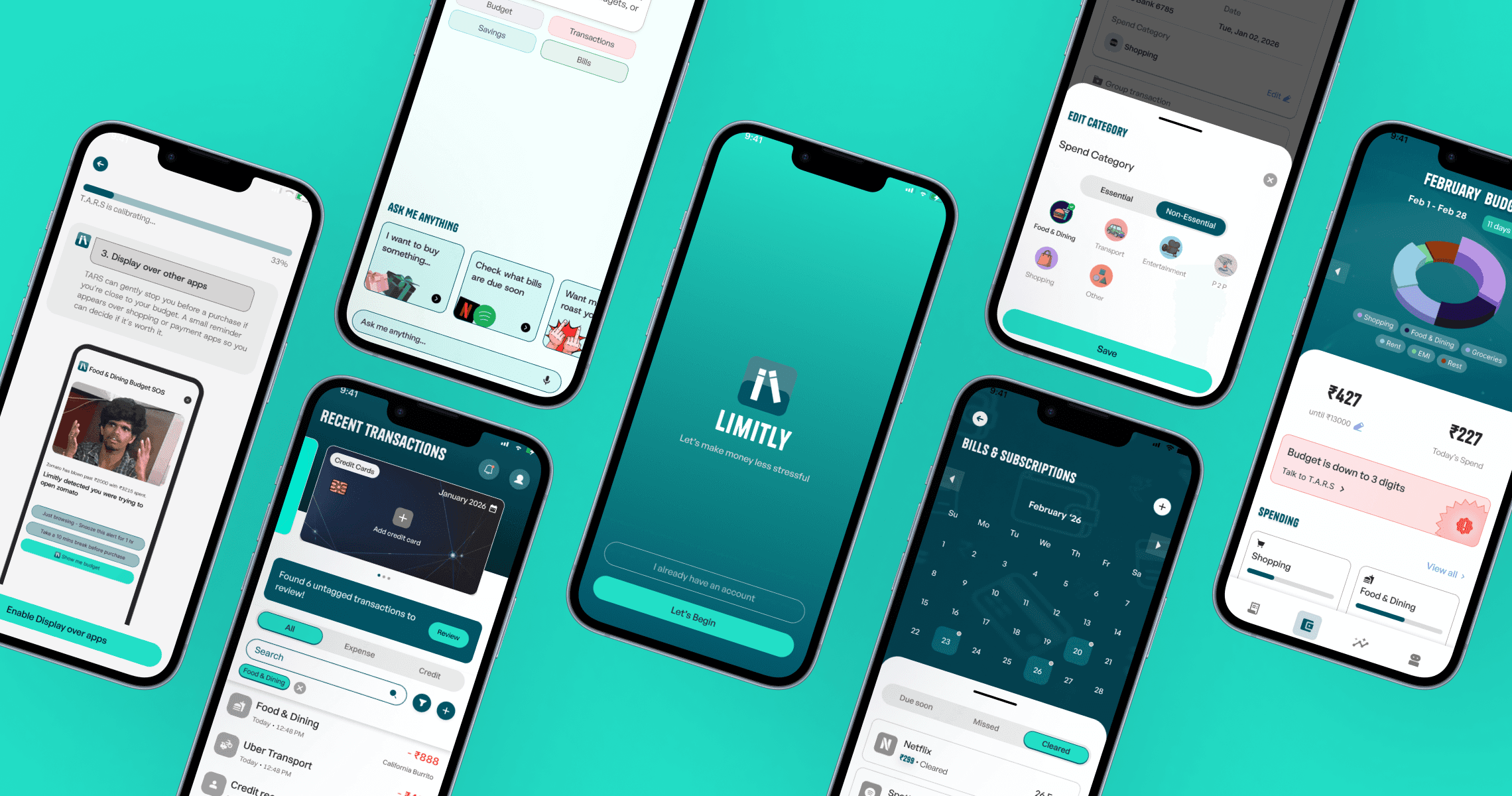
New onboarding

  • Solved for Value before asking for trust

  • User convection through personlisation

  • Low cognitive load

Feature sorting

  • Scrapping home page

  • Clarity among feature sets

  • Strategically integrating insights across relevant sections

Transactions & reviews

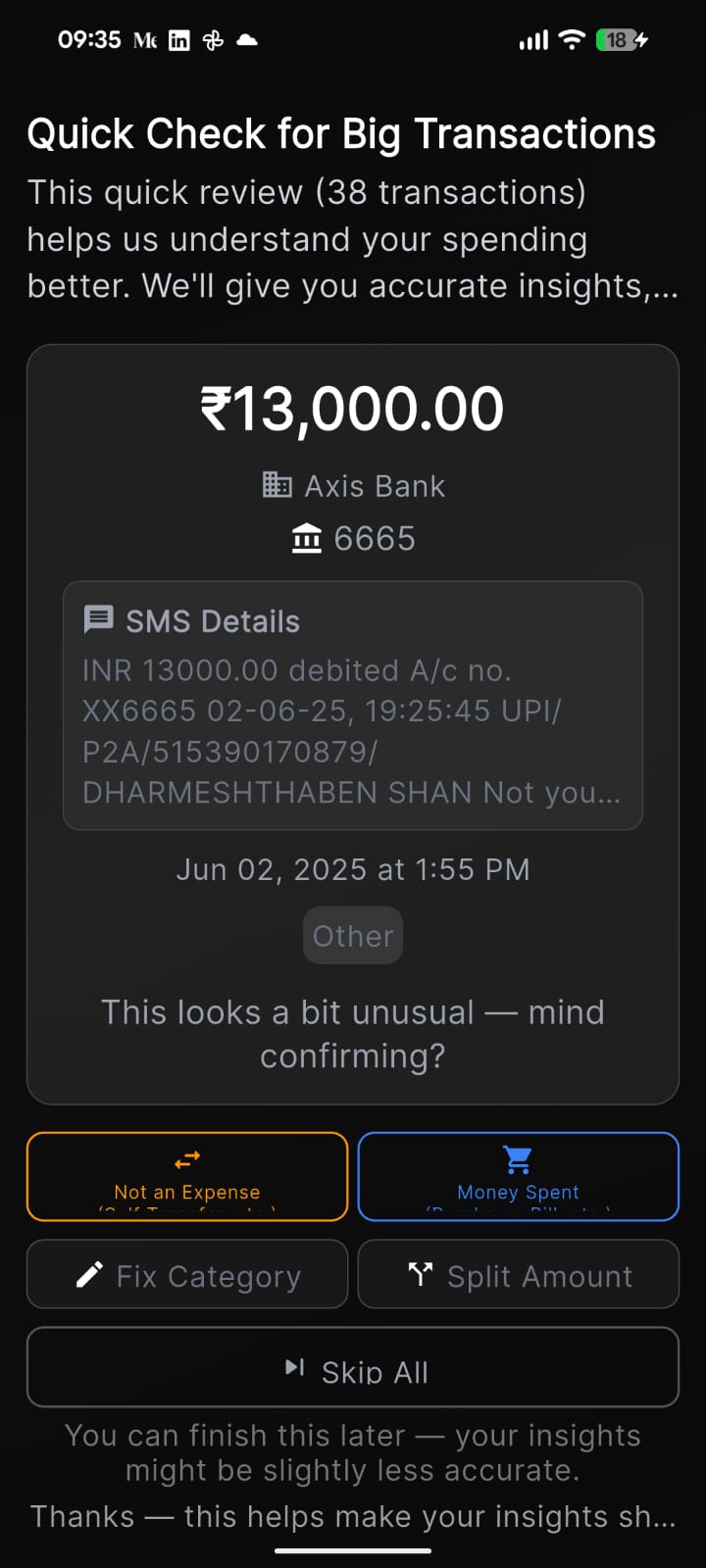
Our intention behind transaction reviews

Our intention behind
transaction reviews

Users no longer had to dig through budgets to find miscategorized transactions. They could catch what the system missed, without going looking for it. So gaps between check-ins never snowballed into bigger errors.

Automated budgets

Solving for: Cannot control overspending.

Solving for: manual logging is a hassle & boring

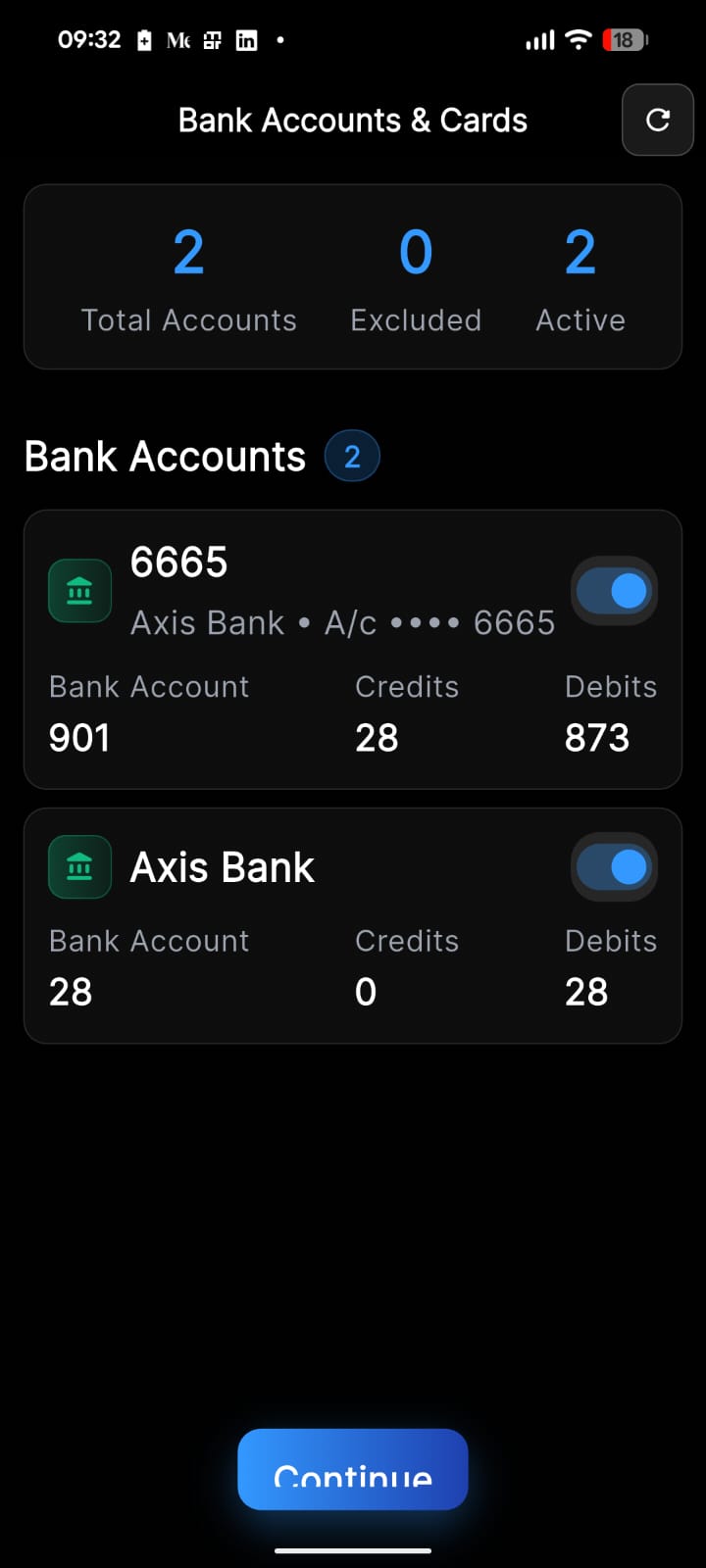
  • SMS transactions auto-read and sorted into categories

  • Budget limits set from your spending patterns (adjustable)

  • No manual input needed to get started.

Bills & Subscriptions

Solving for: Untracked & forgotten subscriptions

  • Due date alerts before the deduction hits

  • Adding bills on marked dates

Splitting expenses & groups

  • Add friends via contacts or email

  • Split any transaction across the group

  • Tracks balances and sends reminders automatically

Splitting an expense

Adding a Friend

When user tries to leave group without settling splits

Great, now lets test it

Results of user testing
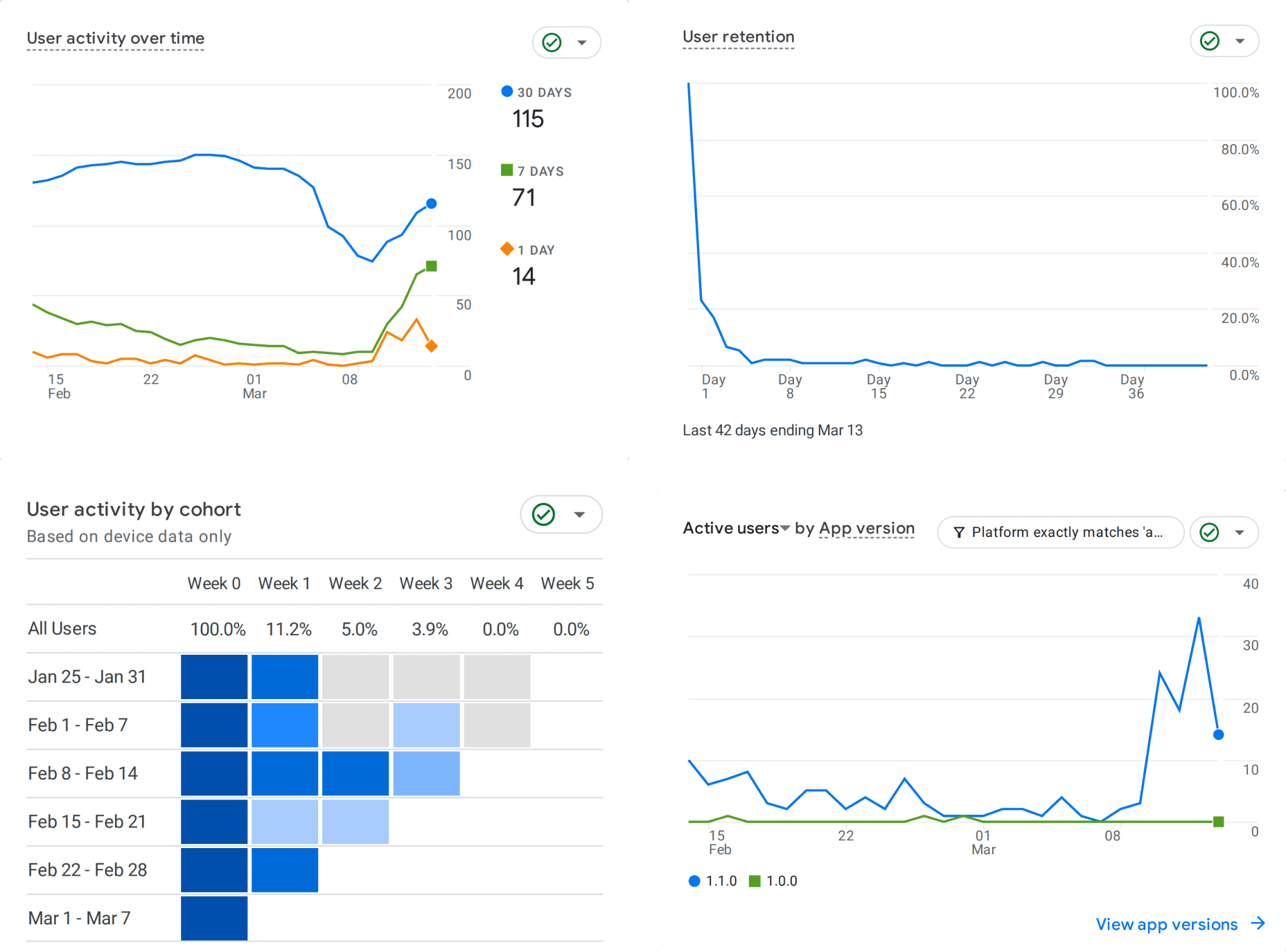
  • The reskin launched and early signals looked promising, with users actively exploring the product and navigating with ease.


  • We successfully addressed the onboarding problem, achieving a higher onboarding completion rate and stronger Day 0 engagement, with average session time reaching 727 seconds.


  • Retention dropped sharply soon after—falling to 6.6% by Day 3 and below 1% by Day 5.


  • By Day 8, average session time declined to 5.5 seconds, revealing that visual improvements alone were not enough to sustain long-term value.

  • The reskin launched and early signals looked promising, with users actively exploring the product and navigating with ease.


  • We successfully addressed the onboarding problem, achieving a higher onboarding completion rate and stronger Day 0 engagement, with average session time reaching 727 seconds.


  • Retention dropped sharply soon after—falling to 6.6% by Day 3 and below 1% by Day 5.


  • By Day 8, average session time declined to 5.5 seconds, revealing that visual improvements alone were not enough to sustain long-term value.

Cool, so what's next?

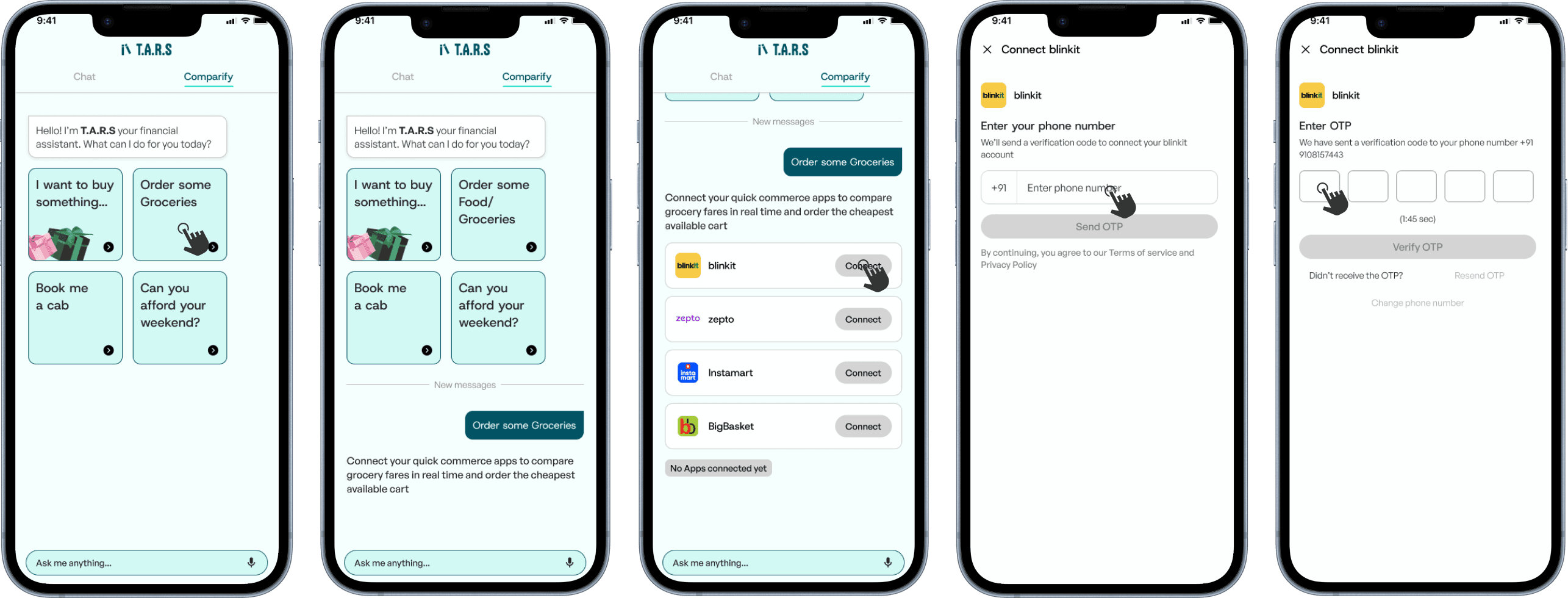
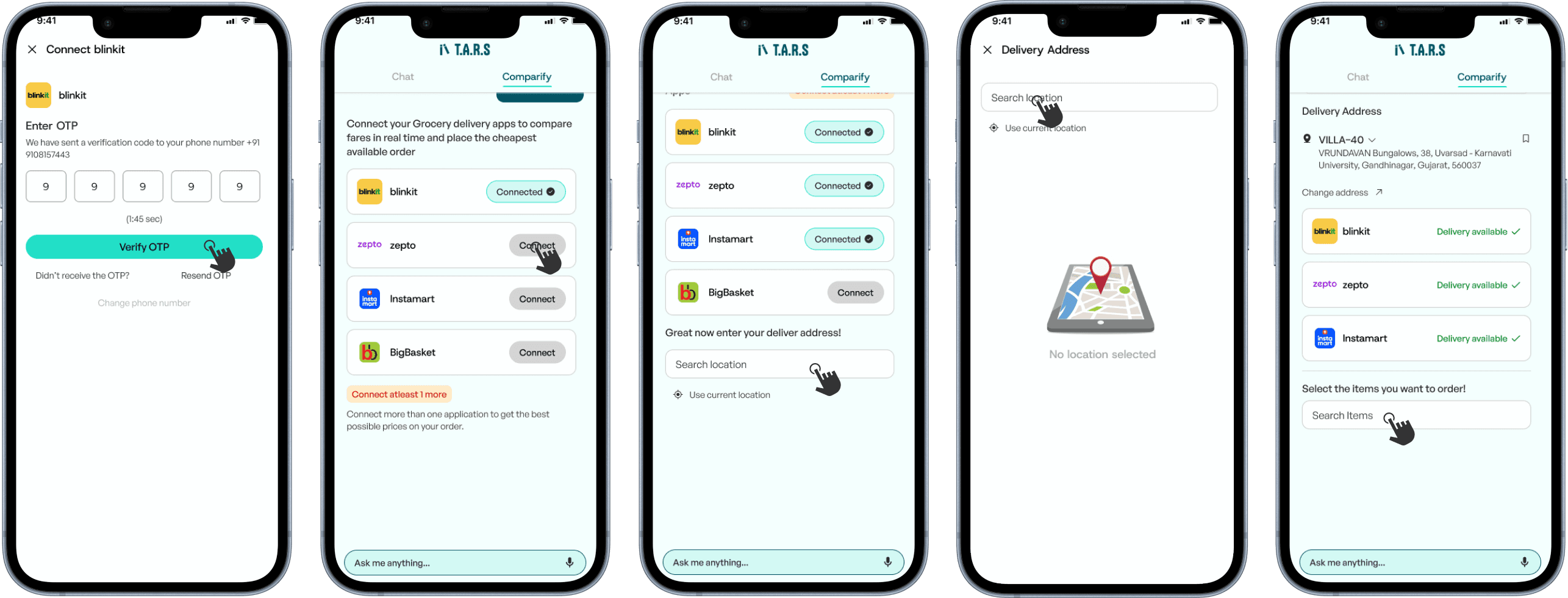
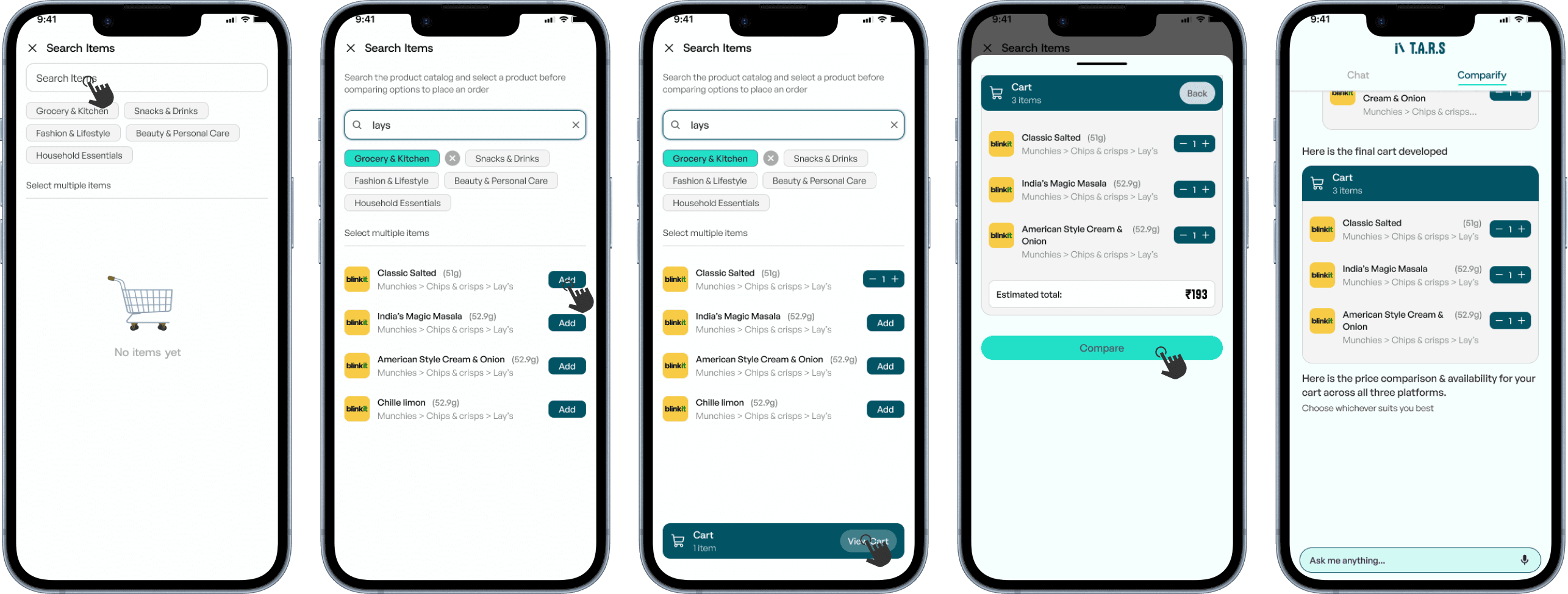
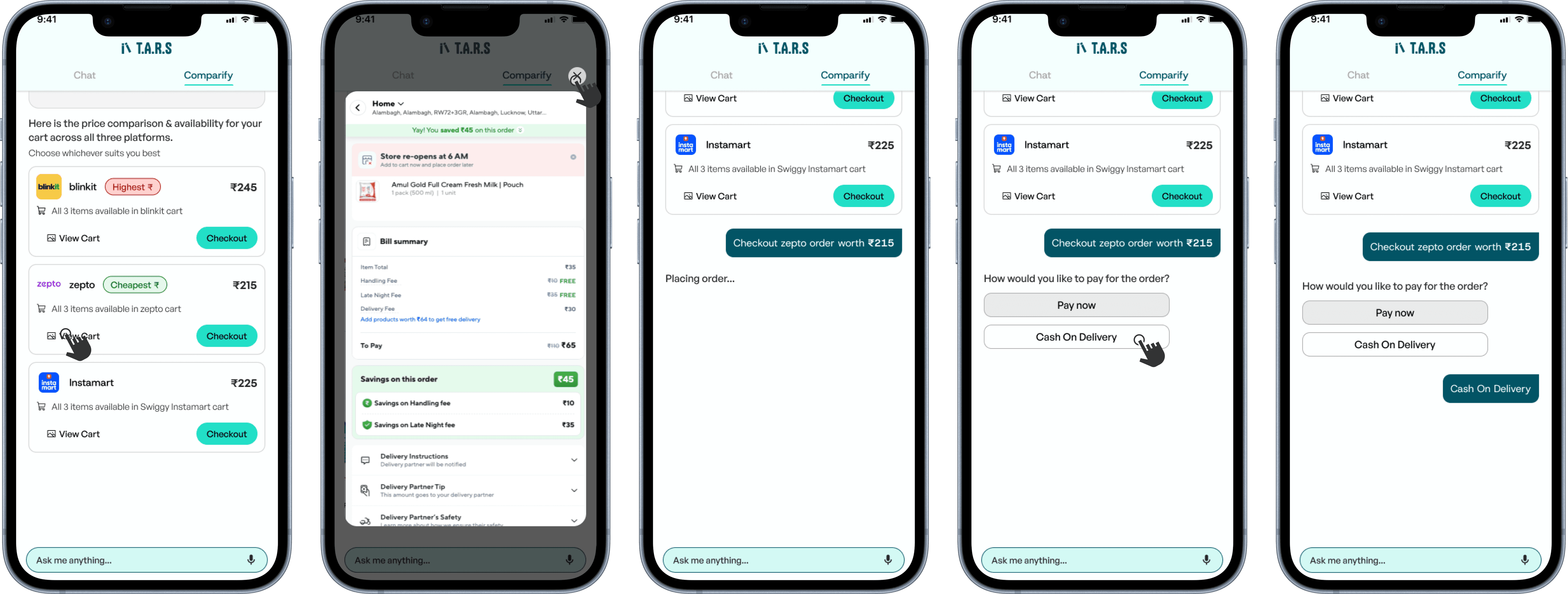
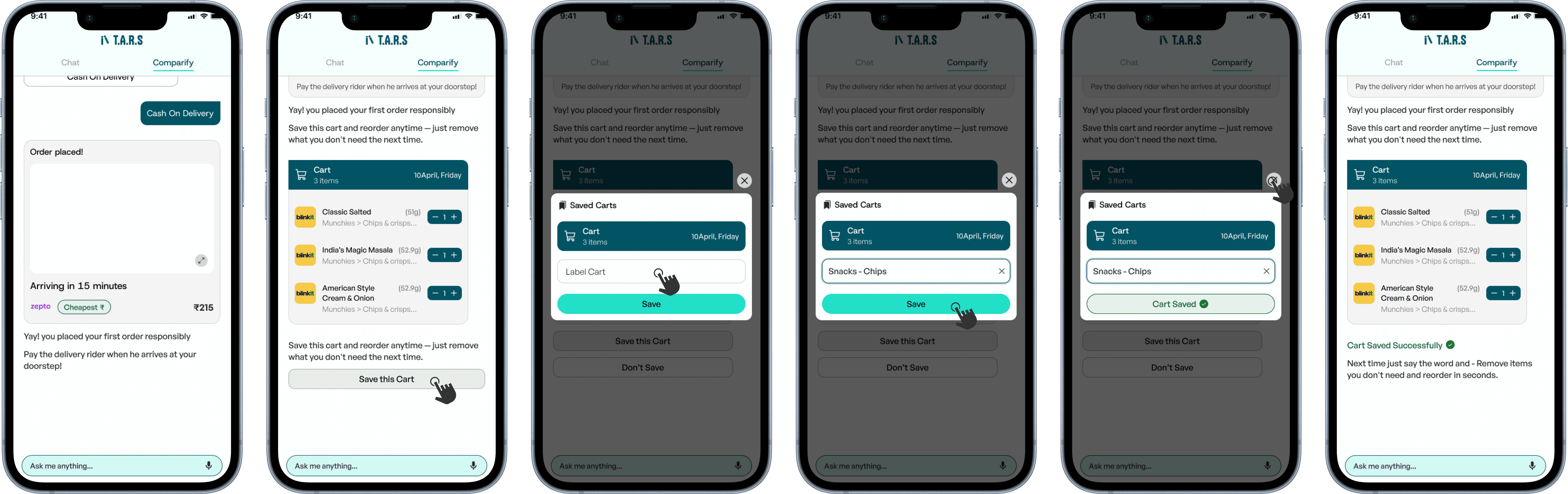
Agentic T.A.R.S - Exploration
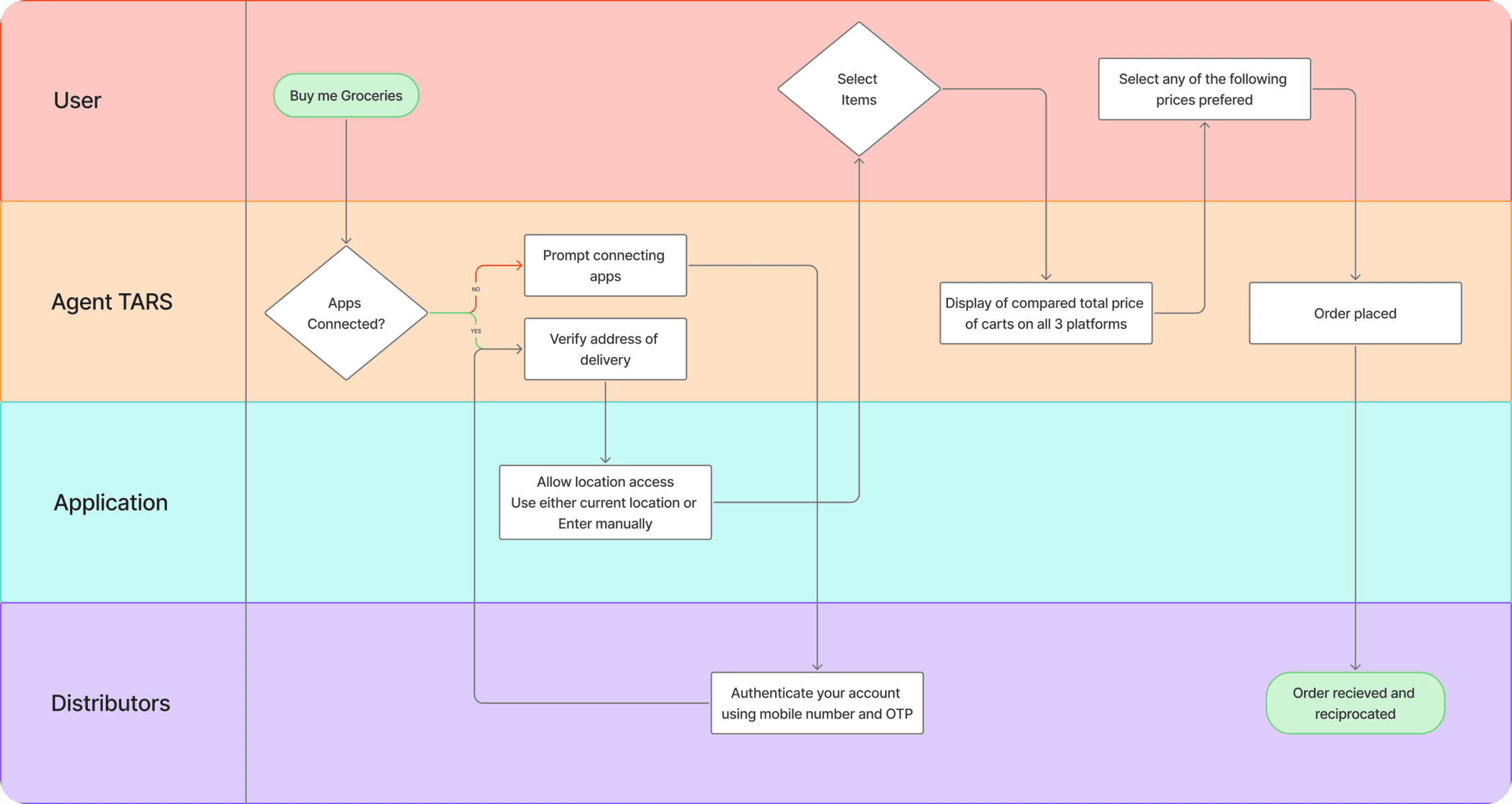
I created a Swimlane diagram that delineates responsibilities by segregating process steps into distinct horizontal or vertical lanes, where each lane represents a specific person, department, team,
or system.

I created a Swimlane diagram that delineates responsibilities by segregating process steps into distinct horizontal or vertical lanes, where each lane represents a specific person, department, team,
or system.

Agentic T.A.R.S

Groceries were the starting point — a category every user had, a spend that recurred every month, and a scenario specific enough to test against.

Groceries were the starting point — a category every user had, a spend that recurred every month, and a scenario specific enough to test against.

What stayed with me

Results

Introduced a new onboarding framework that helped improve onboarding completion and strengthen Day 0 engagement, with average first-session time reaching 727 seconds.

Key learnings

  1. Learned what design means when working with an early stage startup.

  1. Learned what design means when working with an early stage startup.

  1. Understood the importance of simplifying flows without removing functionality through AI

  1. Developed prioritization skills when working with a time contraints.

VARAD ATHALYE

varad191204@gmail.com

+91 9108157443

Back to top

VARAD ATHALYE

varad191204@gmail.com

+91 9108157443

Back to top

Create a free website with Framer, the website builder loved by startups, designers and agencies.